
When a search result knows your profile better than your website
Someone searches for your business and finds a social profile before the official website. An AI answer describes an old service, an outdated location or a claim you no longer use. The first reaction is often to look for a special AI optimisation trick.
A better starting point is to inspect the information you publish. If your homepage, About page and profiles describe different businesses, a prospective customer has the same problem as a search system: deciding which account is current.
This guide is about making your identity and offer easier to verify. It is not a method for controlling an AI answer or ensuring that your website appears first.
1. Build one factual business reference
Create a short internal reference that the person updating your website and profiles can use. Include the public business name, official website, business type, founder where relevant, genuine location, contact route, services and official profile links.
Separate facts from positioning. A founding year can be checked against records. A service list can be checked against current delivery. A phrase such as fastest growing needs a defined comparison, period and credible evidence before it becomes a factual public claim.
Record a source and review date beside each important detail. The reference should help an editor resolve uncertainty rather than repeat a confident statement from an old draft.
2. Make the About page answer ordinary buyer questions
A useful About page tells readers who operates the business, what it does and how it works. Explain the founder’s role without adding qualifications or career history that you cannot substantiate. Where the business is young, describe the real operating approach.
List the services you genuinely deliver and the type of client they suit. If a project uses outside specialists, be clear about responsibilities where that affects the client’s decision. Avoid language that makes a remote team sound like a network of physical offices.
Give readers a sensible next step. A contact page, a relevant service and an identifiable business profile are more useful than a long paragraph of general enthusiasm.
3. Align profiles without making every description identical
Use the same core identity on the website, LinkedIn and other official profiles. The descriptions can differ in length and emphasis, but the founder, location and main services should not contradict each other.
Imagine a service business whose website says web design, while its current LinkedIn page says paid advertising and its directory profile claims software development. That is a hypothetical example of ambiguity. Review which services are current before rewriting all three.
Keep a profile log with the URL, owner, last review date and any verification needed. Update the profiles you control. If a third-party description is wrong, use its normal correction process rather than creating a duplicate listing.
4. Distinguish a service area from an office
An agency based in India can work with clients in other countries. Explain remote delivery, communication windows and the markets you can practically serve. That is different from claiming a staffed office in each market.
Use location pages only when they give a reader useful, specific information. Repeating the same paragraph with a city name changed adds little clarity. Our international service-page guide explains how to plan genuinely useful regional content.
Consistency does not mean removing helpful detail. It means that the details describe the same real operation wherever a person encounters the business.
5. Use structured data to describe visible facts
Structured data gives a machine-readable description of page information. It should support what a visitor can actually see. Review the business name, website, logo and official profile links in your Organization markup against the factual reference.
Google’s Organization documentation describes supported properties. Use official identity links where appropriate, rather than collecting unrelated directory URLs just to make the markup longer.
For articles, keep the author, headline, image and dates consistent with the article itself. A schema field is not independent evidence that a claim is true. It also does not guarantee a search feature or an AI citation.
6. Write evidence that a buyer can inspect
Replace a broad claim with a useful explanation whenever possible. Instead of saying that your process is advanced, show what a campaign review includes, what the client receives and which decisions need their input.
A case study can explain the starting problem, period, work completed and measurement limitations. Publish results only when you have permission and reliable records. If an example is hypothetical, label it before presenting the numbers.
Reviews should link to the genuine platform and accurately identify the source. Do not invent a testimonial, combine ratings in a misleading way or present a partner badge as a certification.
7. Keep useful content accessible and connected
Publish important explanations as readable page text, with clear headings and working links. A brand statement inside an image alone is harder for many visitors to use. Give relevant images descriptive alternative text and use them to support the explanation.
Connect the About page, service pages and related guides where the relationship is useful. Our internal linking guide shows how a reader can move from a question to an implementation service.
If a page is not being fetched or indexed, review that issue separately. The indexing diagnosis guide provides a starting checklist. Publishing another identity paragraph will not resolve every technical access problem.
What Google says about AI features
Google’s AI feature guidance says established SEO practices remain relevant. Supporting links must be indexed and eligible for a search snippet. Meeting the requirements does not guarantee selection.
Treat that as a reason to build a useful, accessible website, not a new badge you can purchase. Other AI services can use different sources and controls, so do not assume one platform’s documentation describes every assistant.
Our separate Preferred Sources guide discusses that Google feature. Keep it distinct from correcting the factual information about your own business.
8. Keep a small record of mismatches
Record the query, platform, observation date, answer and accessible source links when you notice a mismatch. Keep a screenshot if it helps document the issue. Then check whether the incorrect information exists on a page you control.
If the website contains the old fact, correct it and review related profiles. If the answer cites an outside source, inspect that source and use its correction process where appropriate. Do not treat repeatedly asking the same prompt as evidence that the underlying information changed.
Review outcomes periodically rather than refreshing every hour. Responses can vary by question, context and time, and a correct answer on one occasion does not prove universal consistency.
A practical first-week plan
Start with the homepage, About page, contact page and your main official profile. Compare the core facts and resolve contradictions. Then review the business schema and the three service pages most likely to be read by a prospective client.
Assign an owner for the reference and profile log. Revisit them after a service change, rebrand, new contact route or genuine business milestone. A simple update process reduces the chance that old descriptions return during future editing.
For implementation help, explore AI search and GEO support, online reputation management and SEO services. Ask for a scope based on verifiable work and reporting, not guaranteed AI recommendations.
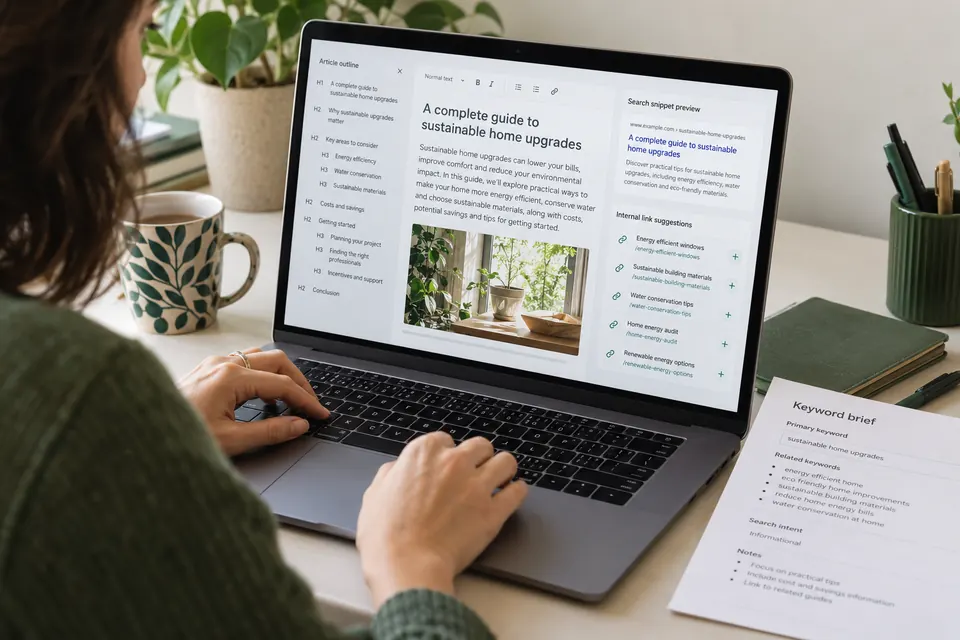
Editorial note: this original guide was prepared with AI assistance on 27 October 2026. Business examples are hypothetical, not claims about a client. The featured image is an AI-generated editorial scene.